






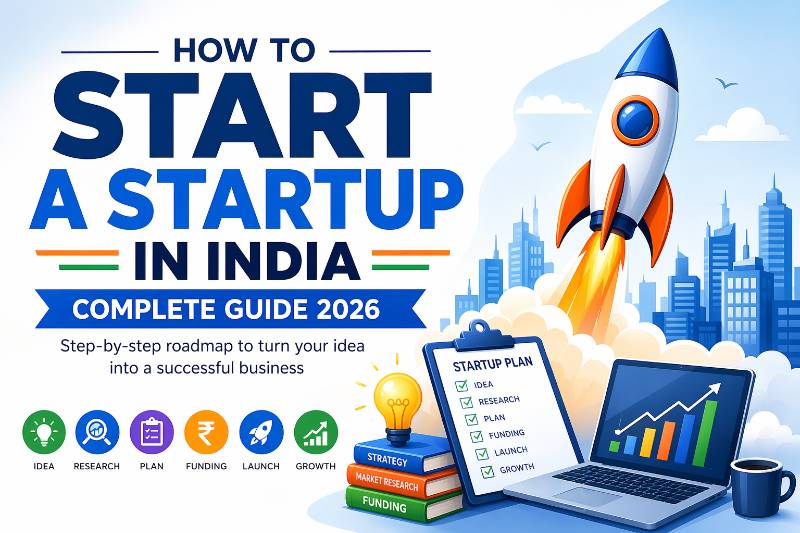
Starting a startup in India is no longer just a dream—it’s a real opportunity. With the rise of digital platforms, government support, and access to funding, India has become one of the fastest-growing startup ecosystems in the world.
Whether you're a student, working professional, or aspiring entrepreneur, this guide will walk you through everything you need to know about starting a startup in India.
💡 What is a Startup?
A startup is a business that focuses on solving a problem with an innovative idea and aims for rapid growth. Unlike traditional businesses, startups are usually scalable and technology-driven.
🔍 Step 1: Identify a Profitable Business Idea
Every successful startup begins with a strong idea. Ask yourself:
- What problem am I solving?
- Who are my target customers?
- Is there demand in the market?
Popular startup ideas in India:
- Fintech apps
- E-commerce businesses
- Digital marketing agencies
- EdTech platforms
- Health & fitness apps
👉 Tip: Validate your idea by talking to real users before investing money.
📊 Step 2: Do Market Research
Before launching, understand your market:
- Analyze competitors
- Identify customer needs
- Study pricing strategies
Tools you can use:
- Google Trends
- Surveys
- Social media insights
📝 Step 3: Create a Business Plan
A solid business plan helps you stay focused and attract investors.
Include:
- Business model
- Revenue streams
- Marketing strategy
- Financial projections
🏢 Step 4: Choose a Business Structure
In India, you can register your startup under different structures:
- Sole Proprietorship (easy to start)
- Partnership Firm
- LLP (Limited Liability Partnership)
- Private Limited Company (best for startups)
👉 Most startups prefer Private Limited Company for funding and scalability.
📄 Step 5: Register Your Startup
To legally start your business, you need to:
- Register your company with the Ministry of Corporate Affairs
- Apply for PAN & TAN
- Open a business bank account
- Register for GST (if applicable)
You can also apply under Startup India to get benefits like tax exemptions and funding support.
💰 Step 6: Arrange Funding
Funding is crucial for growth. Options include:
- Bootstrapping (self-funding)
- Friends & family
- Angel investors
- Venture capital
- Bank loans
Platforms like SIDBI and NABARD also support startups.
🌐 Step 7: Build Your Online Presence
In today’s digital world, your online presence is your identity.
- Create a website
- Use social media platforms
- List your business on Google
You can also use platforms like Shopify or WordPress to get started quickly.
💳 Step 8: Set Up Payment Systems
To accept payments easily:
- UPI
- Payment gateways
- Payment links
Popular payment solutions in India include Razorpay and Paytm.
📢 Step 9: Marketing & Growth Strategy
Without marketing, your startup won’t grow.
Effective strategies:
- Social media marketing
- SEO (Search Engine Optimization)
- Influencer marketing
- Paid ads
👉 Focus on building trust and brand value.
⚖️ Step 10: Legal & Compliance
Make sure your startup follows:
- GST compliance
- Income tax filing
- Business licenses
- Trademark registration
🚧 Challenges You May Face
Starting a startup is exciting but challenging:
- Lack of funding
- Competition
- Customer acquisition
- Scaling issues
👉 Stay consistent and keep learning.
🌟 Tips for Startup Success
- Start small, think big
- Focus on solving real problems
- Build a strong team
- Listen to customer feedback
- Adapt quickly to changes
📌 Conclusion
Starting a startup in India is easier than ever—but success depends on execution. With the right idea, proper planning, and consistent effort, you can build a successful and scalable business.
Remember: Every big company started small. Your startup journey begins today.