




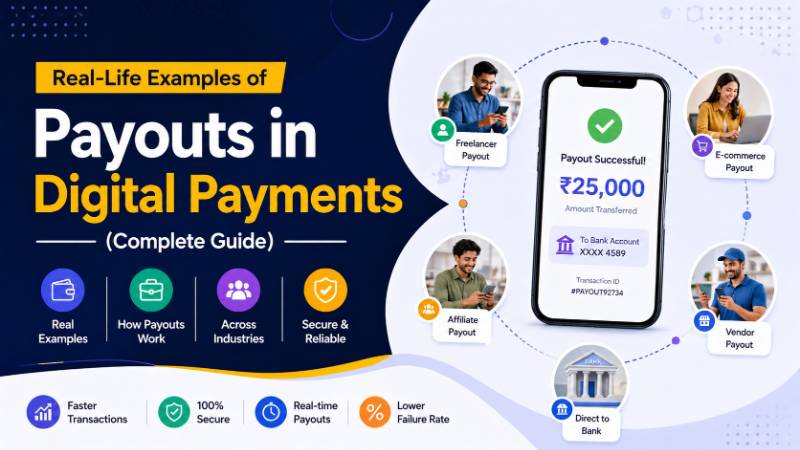
In today’s digital economy, the concept of payouts has quietly become a backbone of how money moves. While most people are familiar with making payments—like paying for groceries or online shopping—payouts work on the opposite side of the transaction. They are the systems that send money out from businesses, platforms, and organizations to individuals, vendors, employees, and partners.
If you’ve ever received a salary in your bank account, earned money from freelancing, or got cashback in your wallet, you’ve already experienced a payout. But the interesting part is how deeply payouts are integrated into our everyday lives—often without us even realizing it.
Let’s explore real-life examples of payouts in a way that connects with daily experiences, while also understanding how businesses use them behind the scenes.
Understanding Payouts Through Everyday Life
Imagine ordering food from an app. You make a payment while placing the order. But what happens after that? The platform collects your payment, keeps its commission, and then sends the remaining amount to the restaurant and delivery partner. That transfer of money is a payout.
This same logic applies across industries. Whether it’s a company paying salaries or a platform rewarding its users, payouts are everywhere.
To make things clearer, let’s dive into real-world scenarios.
Salary Payments: The Most Common Payout
One of the most familiar examples of payouts is salary credited to employees. Every month, companies process payroll and transfer money directly to employee bank accounts.
Behind the scenes, businesses often use automated payout systems to handle this process smoothly.
In a typical salary payout system:
- Employee details like bank account numbers are stored securely
- The company initiates bulk transfers
- Salaries are credited to multiple employees at once
- Payment confirmations are generated instantly
For large organizations with hundreds or thousands of employees, doing this manually would be extremely difficult. That’s why payout automation is essential.
Freelancer and Gig Economy Payments
The rise of freelancing platforms and gig work has made payouts even more important. Platforms like Fiverr, Upwork, and Swiggy rely heavily on payout systems.
When a freelancer completes a project or a delivery partner finishes an order, the platform releases earnings through payouts.
Here’s how it usually works:
- The platform holds the client’s payment temporarily
- After work completion, funds are approved
- The payout is initiated to the freelancer’s bank or wallet
- The freelancer receives the money within a defined settlement time
This system ensures fairness and trust between clients and service providers.
Ecommerce Seller Settlements
If you’ve ever sold something online, you’ve experienced payouts from ecommerce platforms. Companies like Amazon and Flipkart follow structured payout cycles.
When a customer places an order:
- The platform collects the payment
- The order is processed and delivered
- After a certain period (to handle returns/refunds), the payout is released to the seller
These payouts may happen daily, weekly, or based on settlement cycles.
For sellers, timely payouts are crucial because they impact:
- Inventory management
- Cash flow
- Business growth
Cashback and Rewards Systems
Another everyday example of payouts is cashback and rewards. When you receive cashback after making a purchase, that money is being paid out by the company.
Apps like Paytm and PhonePe frequently use payouts to reward users.
These payouts are usually:
- Instant or near real-time
- Credited to wallets or bank accounts
- Used as promotional incentives
Cashback payouts are a powerful marketing tool because they encourage users to keep transacting on the platform.
Affiliate and Commission Payments
Affiliate marketing is another area where payouts play a key role. Many businesses pay commissions to individuals who promote their products or services.
For example:
- A person shares a product link
- Someone makes a purchase using that link
- The affiliate earns a commission
- The company sends the payout after verification
This model is widely used in digital marketing and content creation.
Platforms automate affiliate payouts to ensure:
- Accurate tracking of referrals
- Timely payments
- Transparency in earnings
Vendor and Supplier Payments
Businesses often work with multiple vendors and suppliers. Paying them manually can be complicated, especially when dealing with large volumes.
Payout systems simplify vendor payments by:
- Enabling bulk transfers
- Scheduling recurring payments
- Maintaining transaction records
For example, a manufacturing company may pay:
- Raw material suppliers
- Logistics partners
- Service providers
All these transactions are handled through structured payout systems.
Loan Disbursements in Fintech
In fintech, payouts are used to disburse loans. When a customer applies for a loan and gets approved, the money is sent directly to their bank account.
Apps and platforms offering instant loans rely on payout APIs to:
- Transfer funds quickly
- Ensure secure transactions
- Provide real-time updates
This is why many digital lending apps can disburse loans within minutes.
Insurance Claim Settlements
Insurance companies also use payouts when settling claims. Once a claim is approved, the payout is transferred to the policyholder.
This process involves:
- Verification of documents
- Approval of claim amount
- Direct transfer to bank account
Fast payouts in insurance improve customer satisfaction and trust.
Gaming and Contest Winnings
Online gaming platforms and contest apps frequently use payouts to distribute winnings.
For example:
- A user wins a tournament or contest
- The platform processes the winnings
- The payout is sent to the user’s wallet or bank account
Quick payouts are essential here because users expect immediate rewards.
Government Subsidies and Benefits
Governments also use payout systems to distribute money directly to citizens.
In India, schemes often transfer funds directly to beneficiaries’ bank accounts under Direct Benefit Transfer (DBT).
Examples include:
- Subsidies
- Scholarships
- Pension payments
This reduces corruption and ensures that funds reach the right people.
Refunds and Reversals
Refunds are another common form of payouts. When you return a product or cancel a service, the money is sent back to you.
This involves:
- Initiating refund request
- Verifying eligibility
- Processing payout back to original payment method
Although we don’t always think of refunds as payouts, they are an important part of the system.
Final Thoughts
Payouts are everywhere in the digital world. From salaries and freelance earnings to cashback, refunds, and government benefits, they play a crucial role in moving money efficiently.
What makes payouts powerful today is automation and technology. Businesses no longer rely on slow, manual processes. Instead, they use advanced systems and APIs to ensure fast, secure, and reliable transfers.
For users, this means:
- Faster access to money
- Better transparency
- Improved trust in digital platforms
For businesses, it means:
- Efficient operations
- Scalable systems
- Stronger relationships with users and partners
As digital payments continue to grow, payouts will become even more important—quietly powering the financial ecosystem behind the scenes.