





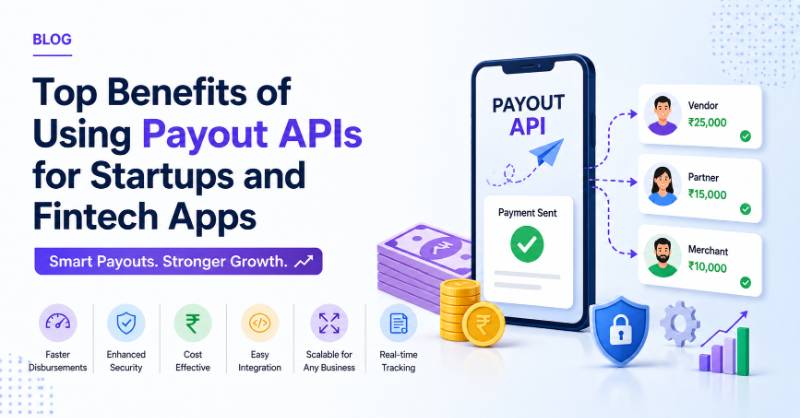
In today’s fast-growing digital economy, startups and fintech companies need fast, reliable, and scalable ways to manage money transfers. This is where Payout APIs come into the picture. They allow businesses to send money directly to users, vendors, freelancers, or partners through automated systems without manual banking processes.
Instead of handling each transaction individually, payout APIs streamline everything into a simple, programmable flow—saving time, reducing errors, and improving customer experience.
Let’s understand the key benefits in a practical way.
Faster and Real-Time Payments
One of the biggest advantages of payout APIs is speed. Traditional bank transfers can take time, especially when handling bulk payments. Payout APIs, on the other hand, enable instant or near real-time transfers through methods like UPI, IMPS, or direct bank APIs.
For startups, this means:
- Freelancers get paid faster
- Sellers receive earnings quickly
- Employees don’t face salary delays
Speed builds trust, and trust is crucial for early-stage businesses.
Automation Reduces Manual Work
Startups often operate with small teams, and manually processing payments can be time-consuming and error-prone.
Payout APIs solve this by automating the entire payout process.
Once integrated, businesses can:
- Schedule payments
- Trigger bulk payouts automatically
- Set rules for recurring payments
This reduces dependency on manual banking operations and lets teams focus on growth instead of administration.
Easy Scalability for Growing Businesses
As startups grow, the number of transactions increases rapidly. Handling 10 payments is easy, but handling 10,000 is not.
Payout APIs are designed to scale effortlessly. Whether you're paying:
- 10 freelancers or 10,000 vendors
- Daily commissions or monthly salaries
The system handles it without additional operational burden.
This scalability is one of the main reasons fintech apps rely heavily on payout APIs.
Improved Cash Flow Management
With payout APIs, businesses get better control and visibility over outgoing payments. Most systems provide dashboards that show:
- Transaction history
- Payment status (success, pending, failed)
- Reconciliation reports
This helps startups manage cash flow more effectively and avoid confusion in accounting.
It also supports better financial planning since everything is tracked in real time.
Better User Experience
In fintech and digital platforms, user experience is everything. Delayed payments can lead to dissatisfaction and loss of trust.
Payout APIs ensure:
- Quick settlements
- Transparent payment tracking
- Reliable transaction status updates
Whether it's a gig worker, seller, or affiliate partner, fast payouts create a positive experience and improve retention.
Lower Operational Costs
Traditional payout methods often involve manual processing, banking fees, and administrative overhead.
With payout APIs:
- Manual workload is reduced
- Errors are minimized
- Operations become more efficient
This leads to significant cost savings, especially for startups operating on tight budgets.
Over time, automation pays for itself by reducing operational expenses.
High Security and Compliance
Security is a major concern when handling financial transactions. Payout APIs are built with multiple layers of protection, including:
- Encryption
- OTP verification
- Fraud detection systems
- Regulatory compliance (KYC/AML standards)
This ensures that transactions are safe, traceable, and compliant with financial regulations.
For startups, this reduces risk and builds credibility with users and partners.
Easy Integration with Apps and Platforms
Modern payout APIs are developer-friendly and can be integrated into:
- Mobile apps
- Websites
- SaaS platforms
- Fintech dashboards
With simple API documentation, startups can connect payout systems without building complex banking infrastructure from scratch.
This accelerates product development and reduces time-to-market.
Supports Multiple Use Cases
Payout APIs are highly flexible and can be used for various business needs such as:
- Freelancer payments
- Affiliate commissions
- Cashback and rewards
- Vendor settlements
- Salary distributions
This versatility makes them essential for fintech apps, marketplaces, and gig economy platforms.
Final Thoughts
Payout APIs have become a backbone for modern startups and fintech apps. They simplify money transfers, reduce manual work, improve speed, and enhance user satisfaction.
In a competitive digital economy, businesses that adopt automation early gain a clear advantage in efficiency and scalability.
If you are building a startup or fintech product, integrating a payout API is not just a technical upgrade—it’s a strategic move toward growth and reliability.